Texas Mints Guide: Private Texas Mints, Silver Rounds & Coin Production
Overview of Texas Private Mints
Texas Mints Guide – Texas mints have played an important role in producing private silver rounds, bullion issues, and commemorative pieces. The state has hosted numerous issuers, manufacturers, and marketers whose products remain collectible today.
This guide explains who made what, how Texas rounds were produced, and which companies shaped Texas private mint history.
What Is a “Mint” in Texas Numismatics?
In traditional numismatic terms, a mint is the facility where a coin, round, or medal was physically struck. In Texas numismatics, the term is often used more broadly.
A “Texas mint” may refer to:
- An issuing company
- A manufacturing facility
- A distributor
- A marketing brand name
Because of this, identifying the true origin of a Texas round often requires separating the seller from the actual producer.
This guide explains how Texas mints operated, how Texas rounds were produced, and who performed each role.
Major Texas Private Mints
Colonial Coins (Houston, Texas)
Led by Dr. George W. Vogt, Colonial Coins was one of the most important Texas bullion firms of the 1980s. The company is closely associated with Official Texas Bullion and related Texas-themed precious metal issues.
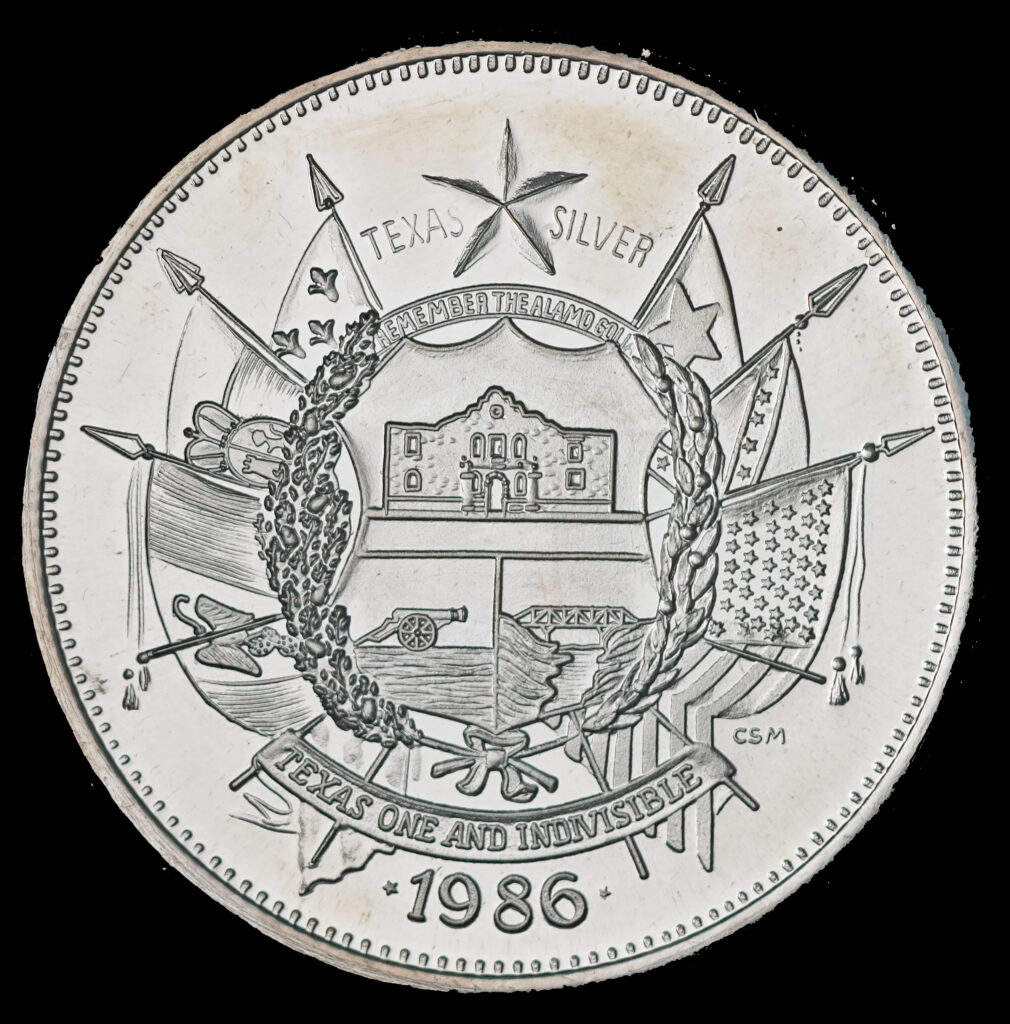
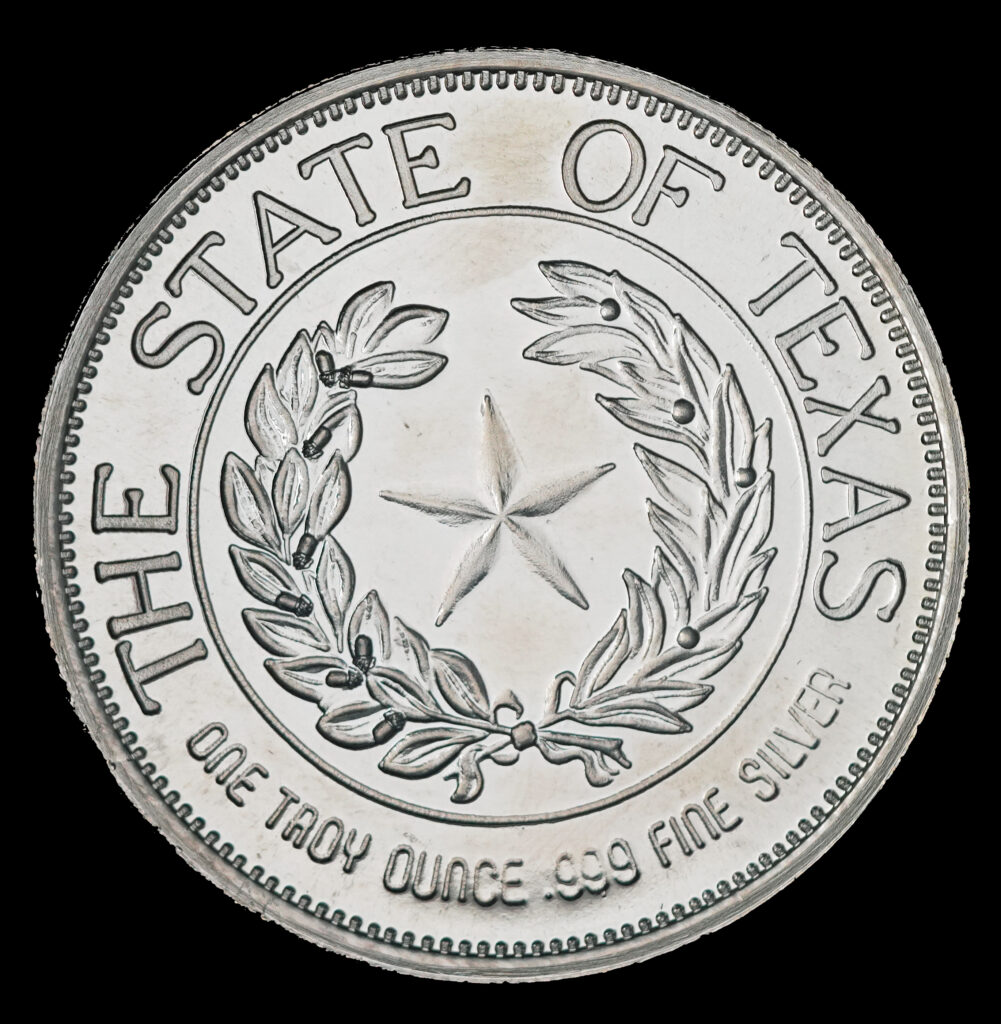
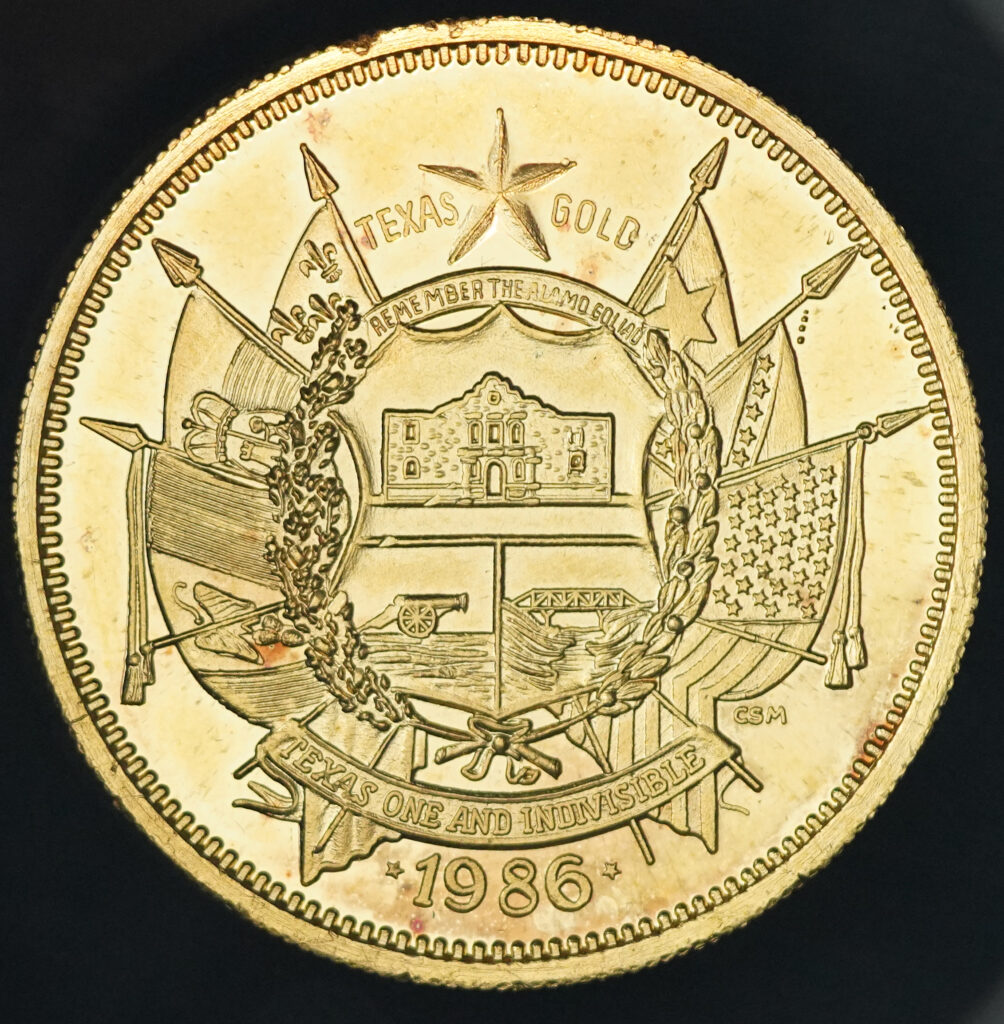
Colonial Coins is documented to have operated in-house minting capabilities, producing silver rounds directly at its Houston facility while also utilizing outside contract production for certain issues.
Lone Star Mint (Plano, Texas)
Lone Star Mint produced collectible silver rounds and commemorative sets focused on Texas history during the mid-to-late 1980s.
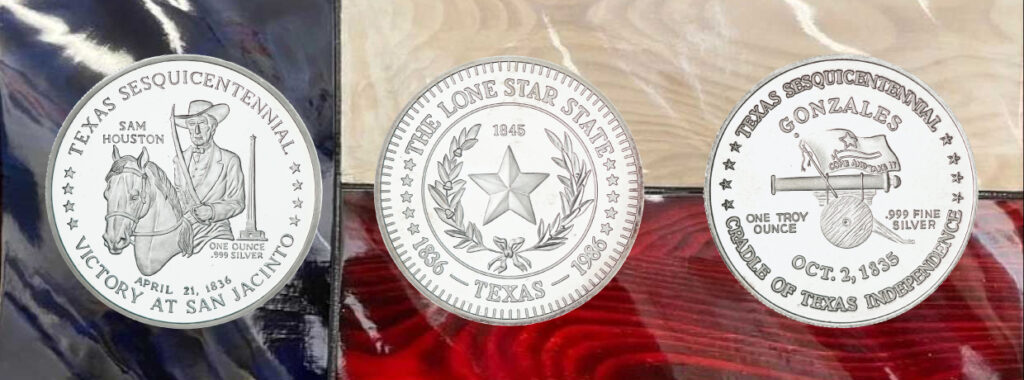
Known issues include the Silver Coins of Texas series, Heroes of the Alamo series, and Republic-era themed releases.
Don Casey – Silvex – Texas Mint | Garland Texas
Don Casey is associated with multiple Texas medallic and commemorative programs during the 1970s and 1980s, including privately issued silver and bronze products.

His operations represent an important North Texas chapter in private mint history.
Texas Mint & Mercantile (Whitney, Texas)
Founded by Rick Pinner, the Texas Mint and Mercantile is best known for the “Texas Silver Dollar” and the “Texas Silver Dime” programs and related issues.
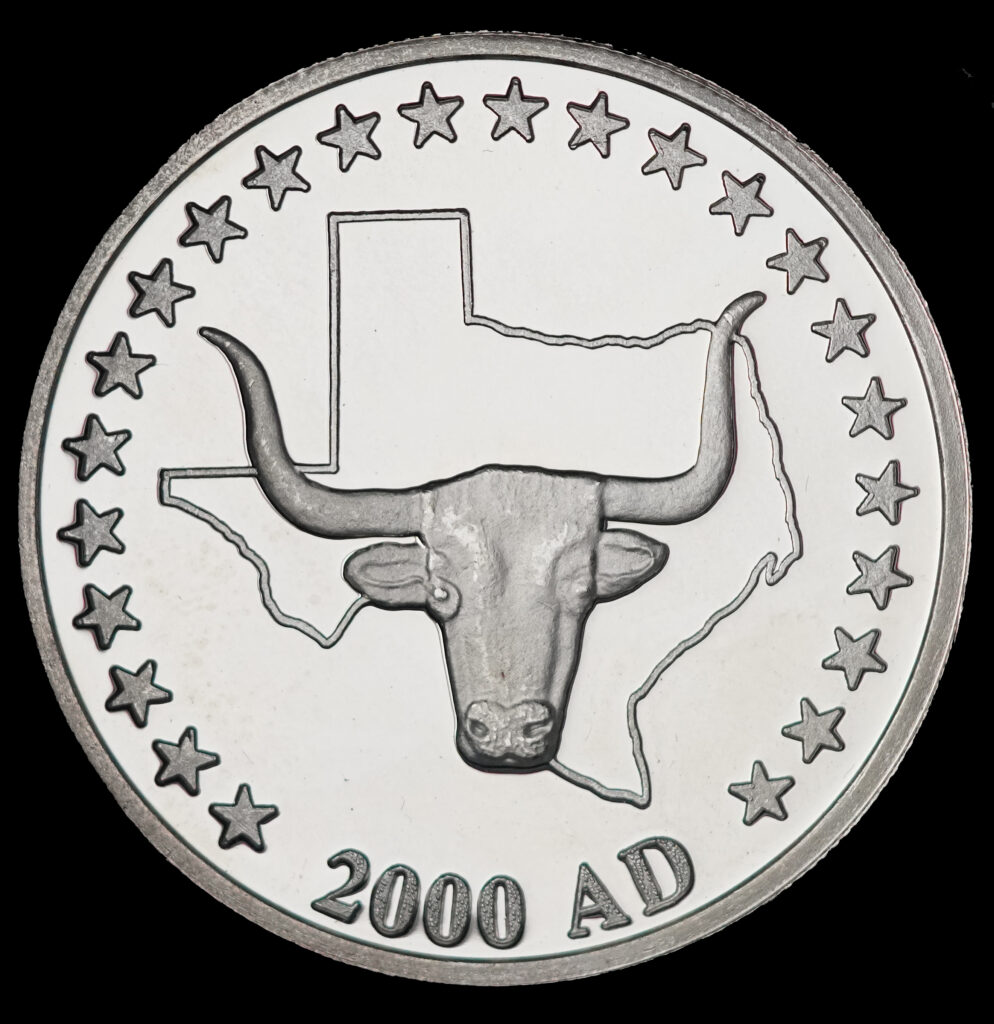
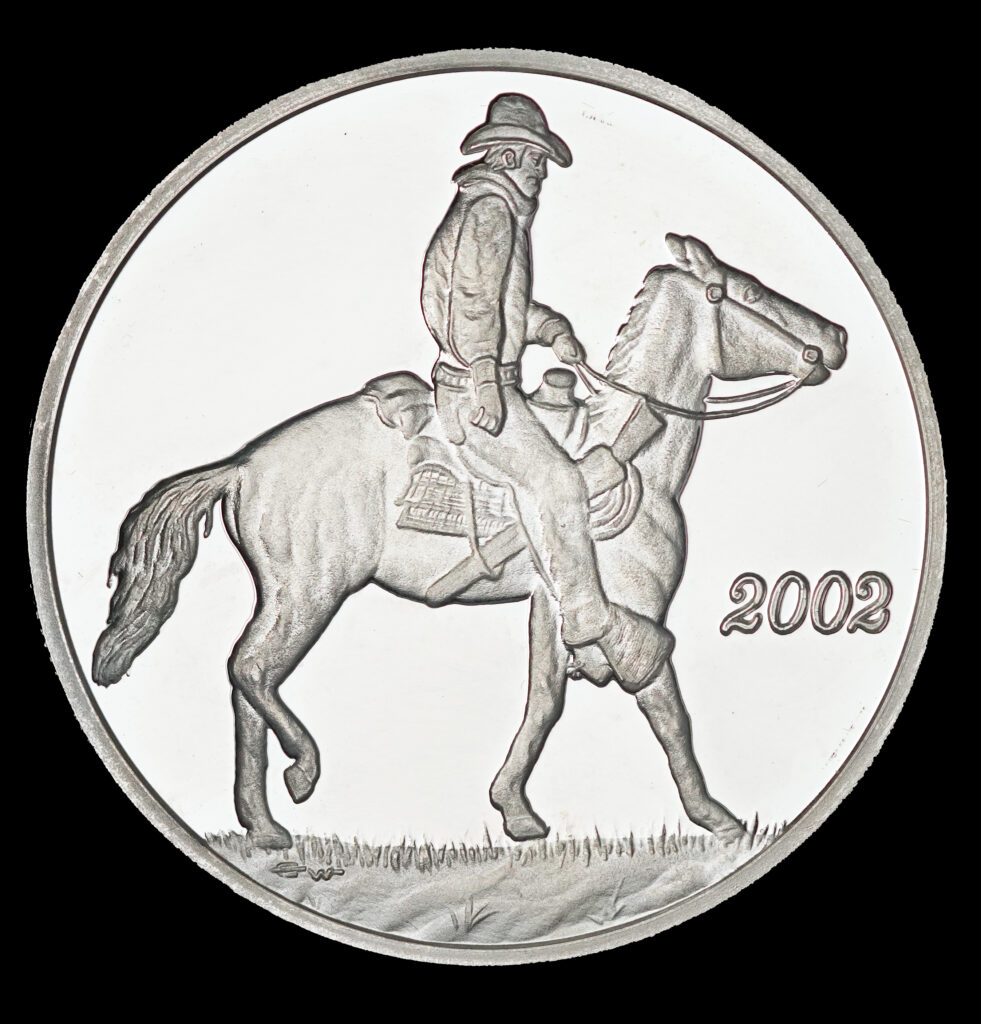
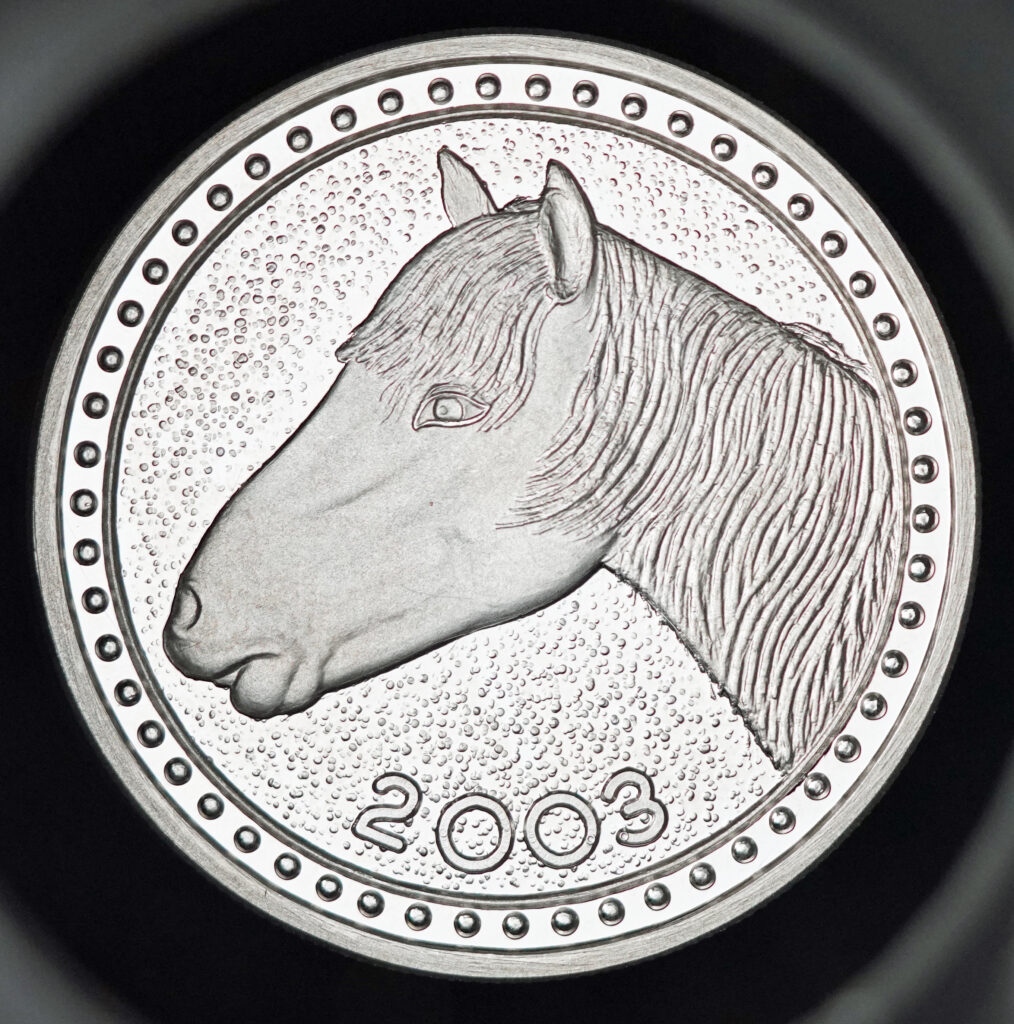
The company functioned primarily as issuer and distributor, with production contracted to outside minting facilities.
W.N.W. Mint Industries (Amarillo, Texas)
W.N.W. Mint Industries is best known for producing the 1973 Texas Rangers Sesquicentennial commemorative program and related Texas heritage issues.
American Custom Minting (Carrollton, Texas)
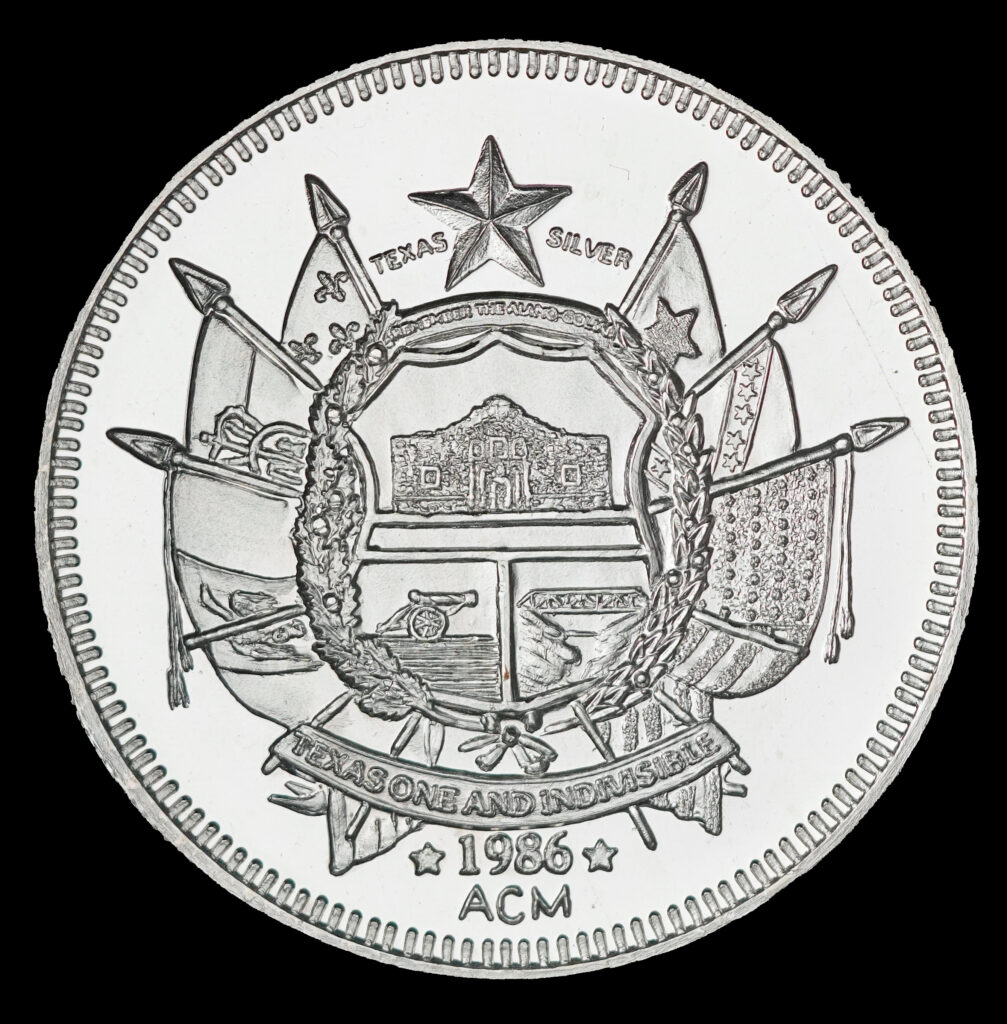
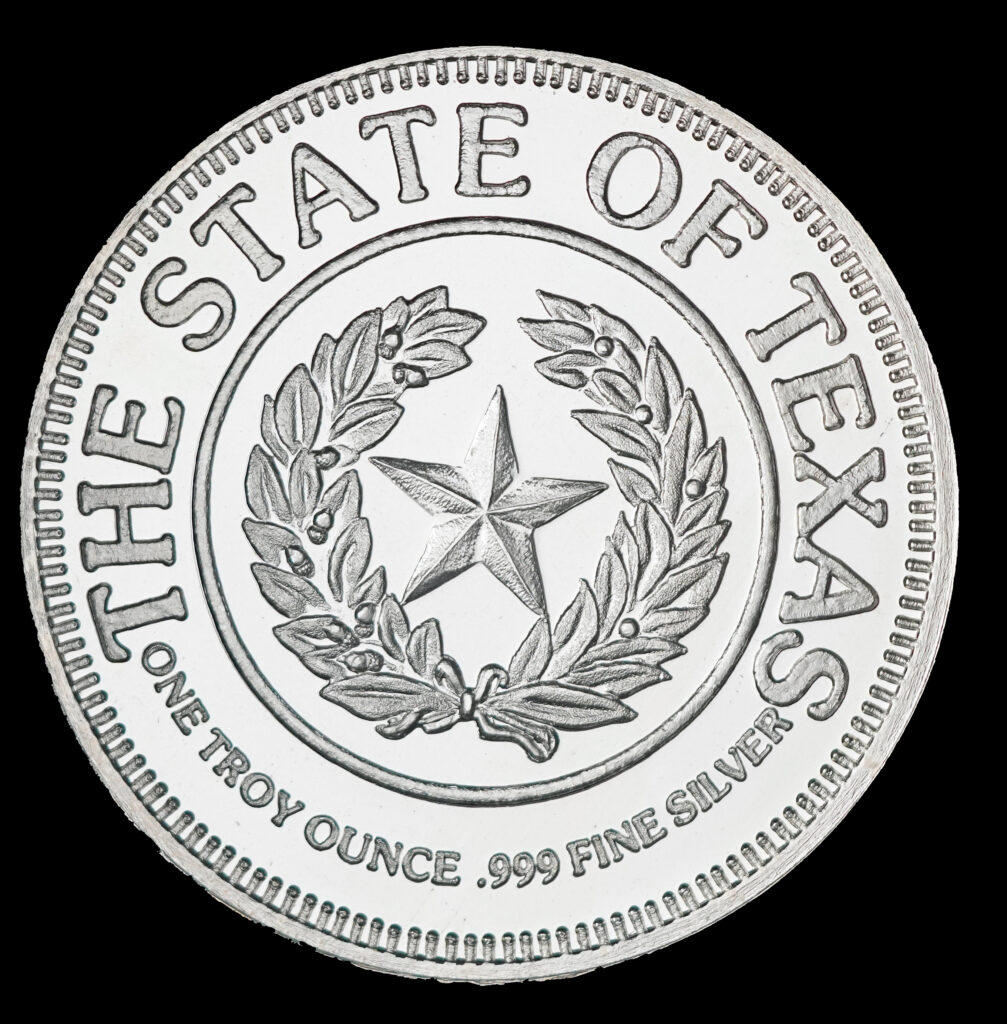
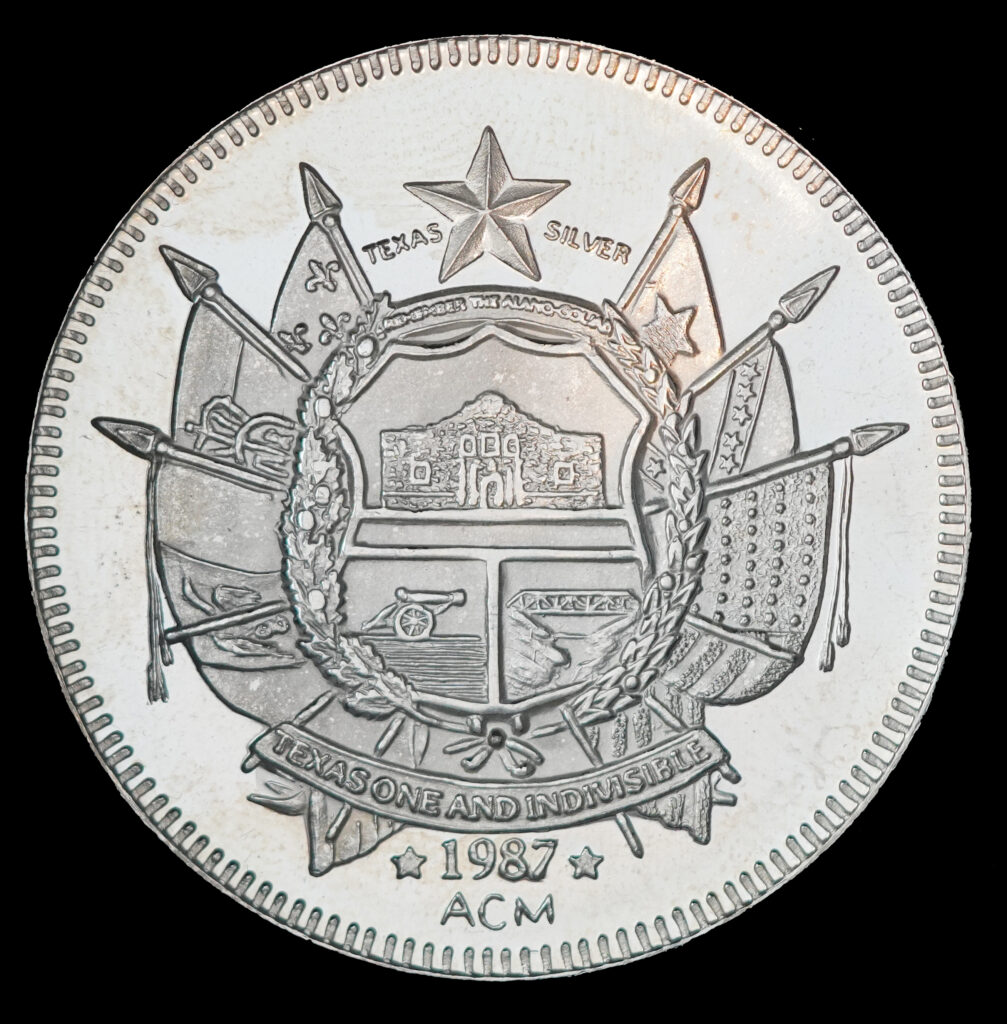
American Custom Minting is associated with North Texas bullion and commemorative production during the late 1980s, including Texas-themed silver rounds.
How Texas Rounds Are Produced
Modern Texas rounds often involved multiple participants:
- Issuer – organized the project
- Designer – created the artwork
- Engraver – prepared dies
- Mint – physically struck the pieces
- Distributor – marketed or sold them
Not every role is known for every issue, which is why attribution research remains important. Texas-based entities produced gold and silver rounds, commemorative medals, and privately issued coin-like pieces.
Mint Marks and Identification
Many Texas-issued rounds include mint marks such as:
- CSM
- CM
- CCM
- P
- LSM
- No mint mark
These marks are often program-specific and do not always identify the physical mint by themselves. Accurate attribution may require die comparison, engraving style analysis, and documented sources.
Related Topics
- Texas Silver Rounds
- Official Texas Bullion
- Texas Trade Units
- Mint Profiles
- Texas Mint Marks
Why Texas Mints Matter
Texas mints helped preserve state history through silver rounds, commemorative medals, and private bullion issues. Many pieces honored the Alamo, Republic of Texas leaders, Texas Rangers, and state heritage themes.