San Antonio Fair, Inc. Overview
San Antonio Fair, Inc. was the not-for-profit corporation that planned, financed, built, and ran HemisFair ’68, the official world’s fair held in San Antonio from April 6 to October 6, 1968, to celebrate the 250th anniversary of the city’s founding. It is also the issuer of record for the national medals Congress authorized for that anniversary, which the United States Mint struck at Philadelphia and furnished to the corporation for sale.
The fair began as an idea among San Antonio businessmen in the late 1950s. Merchant Jerome K. Harris proposed a 1968 exposition that would mark the city’s 250th birthday and the cultural heritage it shared with its Latin American neighbors, and the idea found a champion in Congressman Henry B. González. On January 28, 1962, González met with department store executive William R. Sinkin to discuss a “Fair of the Americas,” and that February the two gathered nearly forty civic leaders at the Granada Hotel and formed a planning council (UTSA Libraries, HemisFair Timeline).
The State of Texas chartered San Antonio Fair, Inc. on December 29, 1962. Its incorporators were Sinkin; James M. Gaines, a broadcasting executive with WOAI radio and television; and H. B. “Pat” Zachry, the San Antonio construction magnate. The first executive committee, formed in April 1963, named González and Mayor Walter W. McAllister honorary co-chairmen, Zachry chairman of the board, and Sinkin president. Marshall T. Steves, who led the underwriting campaign that raised more than $7.5 million in local pledges by the fall of 1963, succeeded Sinkin as president in December 1964. The corporation made its headquarters in the restored German-English School, built in 1868, across the street from the fair site.
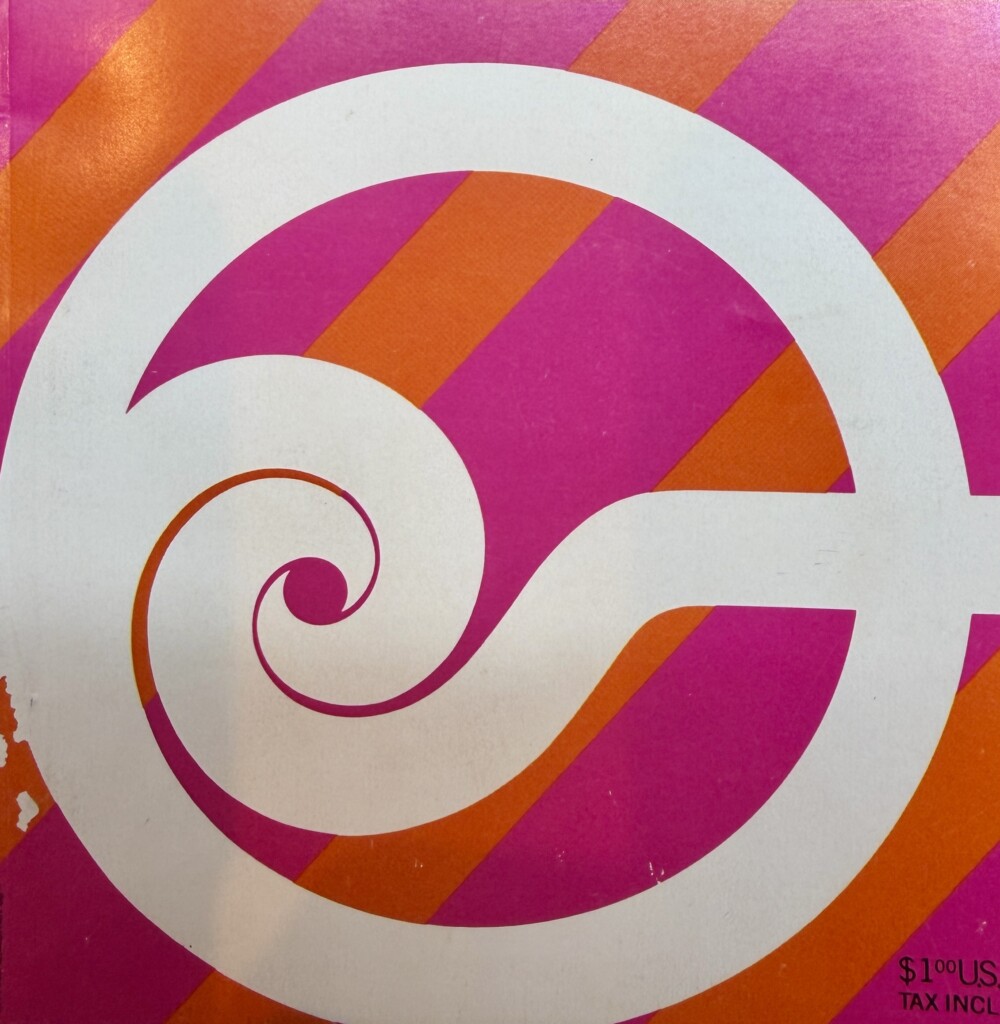
From there it carried the fair through every stage. It commissioned feasibility studies, secured a 92-acre urban renewal site at the southeastern edge of downtown, hired O’Neil Ford and Allison Peery as site architects, adopted the fair’s double-spiral symbol in September 1965, and won official recognition from the Bureau International des Expositions on November 17, 1965. It lobbied the state and federal governments for funding, and with Governor John Connally serving as Commissioner General, it brought in pavilions from foreign governments, industrial exhibitors, and the State of Texas, whose pavilion became the Institute of Texan Cultures. More than six million people visited before the fair closed. HemisFair lost money, but it left San Antonio the Tower of the Americas, its convention center, and the grounds of today’s Hemisfair Park (HemisFair ’68, Wikipedia).
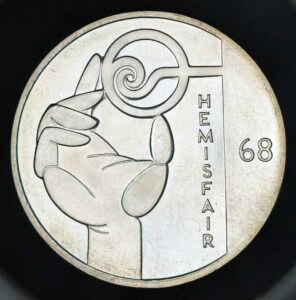
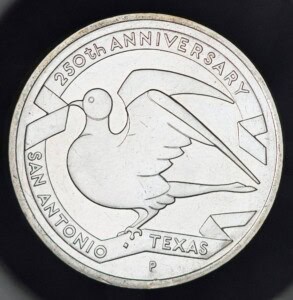
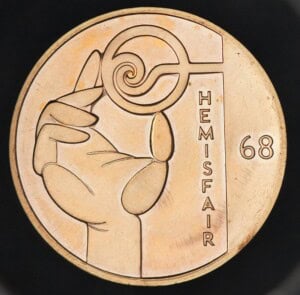
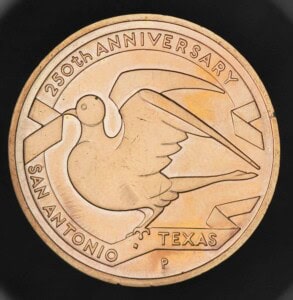
The corporation’s place in this archive comes through its medal program. In 1965 González carried H.R. 7526, a bill directing the Secretary of the Treasury to strike national medals for San Antonio Fair, Inc., and President Lyndon B. Johnson signed it on March 31, 1966, as Public Law 89-382 (The American Presidency Project). The act left the medals’ sizes, metals, and designs to the corporation, subject to Treasury approval, capped production at 100,000 pieces, and required the corporation to pay the Mint’s costs before delivery (Public Law 89-382). The corporation chose a design by San Antonio sculptor Philip John Evett of Trinity University, pairing a hand holding the HemisFair symbol with a dove on a ribbon for the 250th anniversary, and the Philadelphia Mint struck it in silver and bronze with the “P” mint mark: the 1968 San Antonio HemisFair Silver Medal and the 1968 San Antonio HemisFair Bronze Medal.
San Antonio Fair, Inc. Notes
- Chartered by the State of Texas on December 29, 1962; incorporators William R. Sinkin, James M. Gaines, and H. B. “Pat” Zachry.
- Presidents: William Sinkin (1963–1964), then Marshall T. Steves (from December 1964). H. B. Zachry served as chairman of the board.
- Headquarters: the German-English School (1868), across from the HemisFair site.
- Issuer and distributor of the U.S. Mint HemisFair national medals under Public Law 89-382 (March 31, 1966), in silver (Swoger 41B) and bronze (Swoger 41C).
- The corporation’s records, 1962–1995, are held by UTSA Libraries Special Collections as MS 31.
- A separate 1968 HemisFair medal struck by Cajun Coins of Mandeville, Louisiana, was issued by local San Antonio coin clubs for the 10th Texas Numismatic Association convention, not by San Antonio Fair, Inc.
San Antonio Fair, Inc. References
- UTSA Libraries, “HemisFair Timeline, 1962–1968”
- UTSA Libraries, “HemisFair ’68” research guide
- UTSA Libraries Special Collections, San Antonio Fair, Inc., Records, 1962–1995 (bulk 1964–1968), MS 31
- San Antonio Conservation Society, “Planning for a World’s Fair”
- Public Law 89-382, 80 Stat. 98 (March 31, 1966)
- The American Presidency Project, “Remarks Upon Signing Bill Authorizing Medals Commemorating the 250th Anniversary of the Founding of San Antonio” (March 31, 1966)
- BIE, “1968 San Antonio”
- HemisFair ’68, Wikipedia
- 1968 San Antonio HemisFair Silver Medal, The Texas Stacker
- 1968 San Antonio HemisFair Bronze Medal, The Texas Stacker
- United States Mint, The Texas Stacker
- Texas Stacker Archives
Coins from San Antonio Fair, Inc. (San Antonio, TX) (2)