Overview
The State of Texas Rounds are a Texas-themed series of gold and silver issues produced from 1986 through 1991. Marketed as the “Official Texas Bullion” program, the series reflects a structured release of precious-metal products during the expansion of the modern bullion market in the mid-1980s. Distribution and production are documented within the series through Colonial Coins, Inc. of Houston, Texas (CSM, CCM, CM, P, and unmarked issues) and American Custom Minting (ACM) of Dallas, Texas.
The program includes 1 oz silver, 1 oz gold and fractional gold denominations. They are unified by a design centered on the Great Seal of Texas. In the marketplace, these pieces are widely recognized as State of Texas Rounds while the Official Texas Bullion Program name remains associated with original packaging and state-approved program branding.
Historical Context
The State of Texas rounds were introduced in 1986, coinciding with both the Texas Sesquicentennial – marking 150 years of Texas independence – and the launch of the United States Mint’s modern bullion program. This period also reflected changes in federal law that expanded the role of precious metals in investment portfolios, including tax-advantaged treatment for certain bullion holdings, which increased demand for gold and silver products.
Within this environment, private issuers introduced regionally themed bullion alongside national offerings. The State of Texas rounds reflect this convergence of historical commemoration, investment demand, and the growing private bullion industry, combining Texas independence imagery with a structured, multi-denomination precious-metal program.
Design Theme
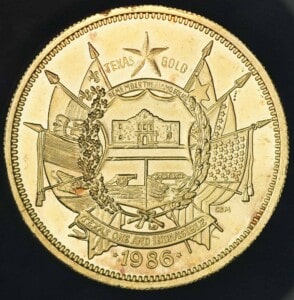
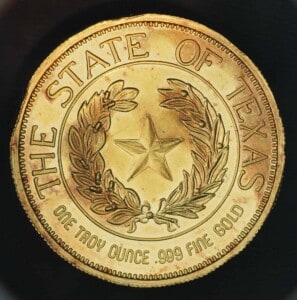
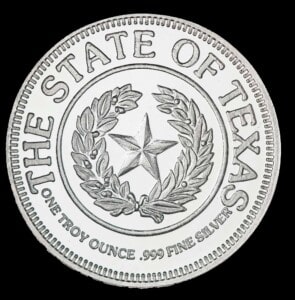
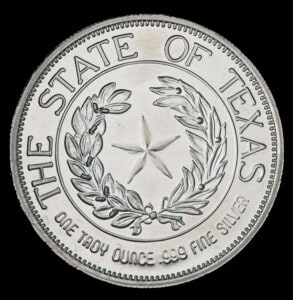
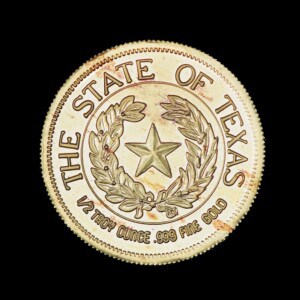
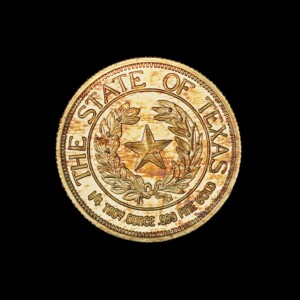
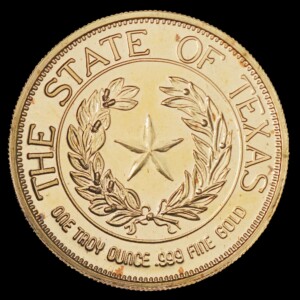
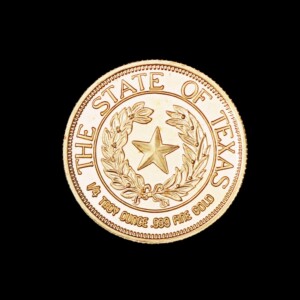
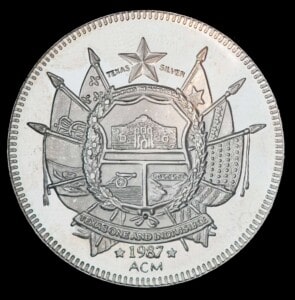
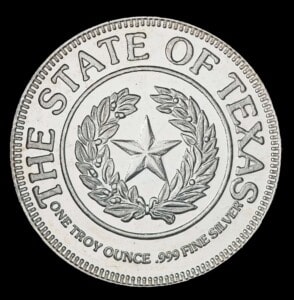
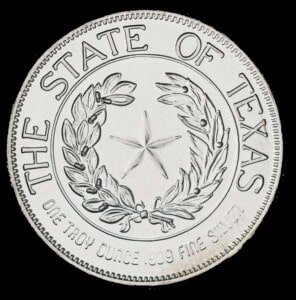
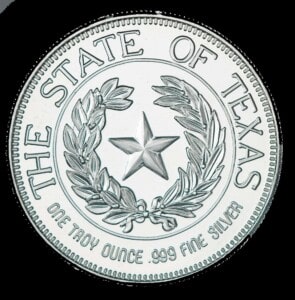
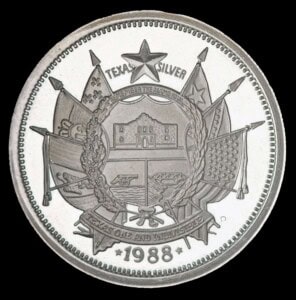
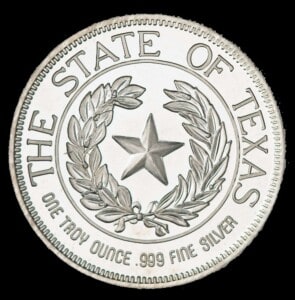
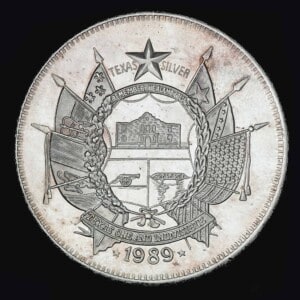
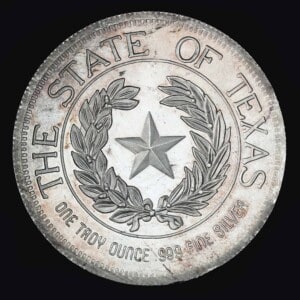
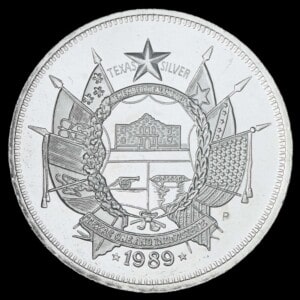
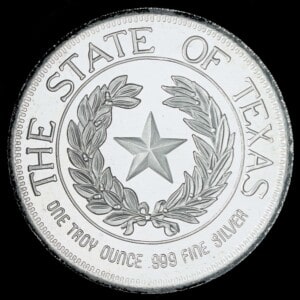
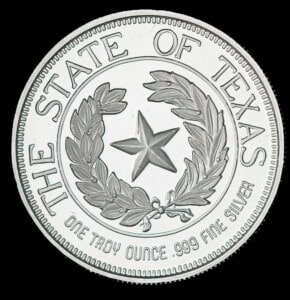
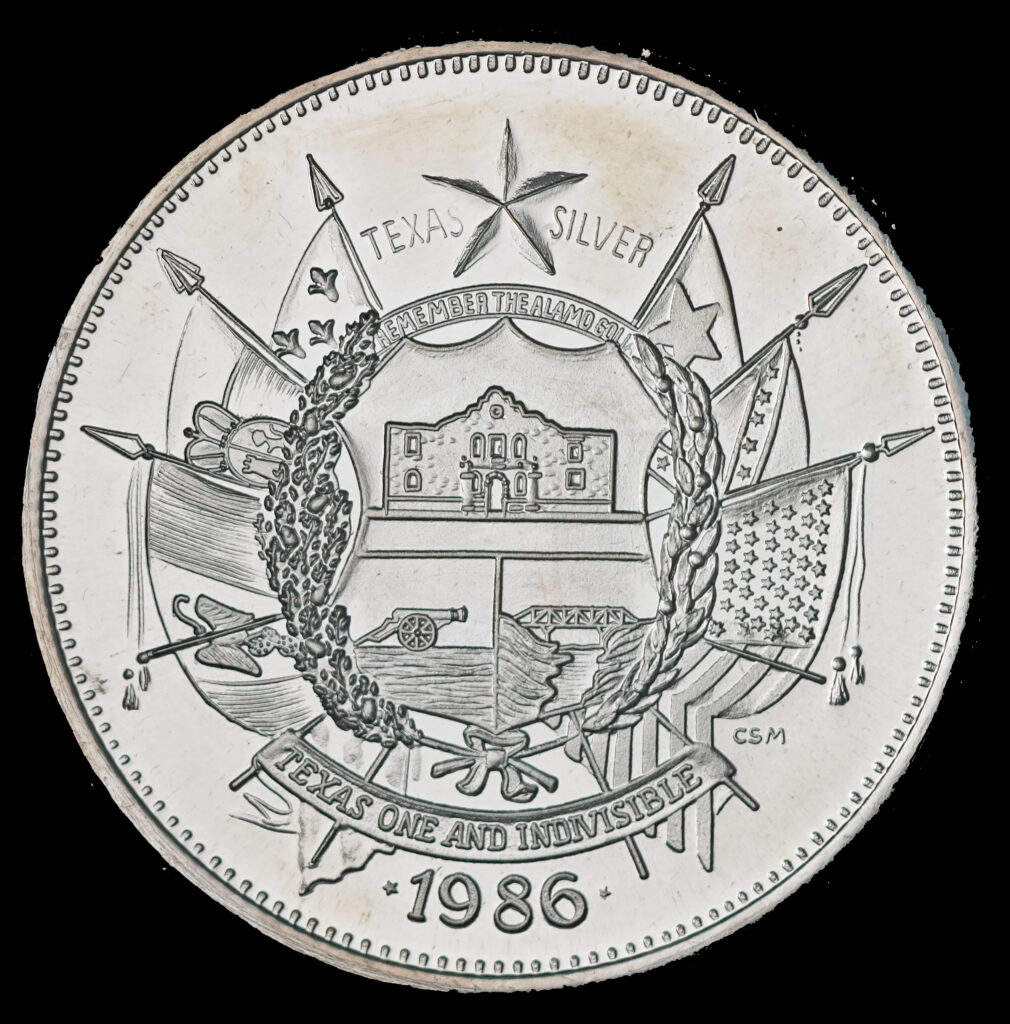
The design of the State of Texas rounds is derived directly from the Seal of the State of Texas, with a deliberate structural inversion. The round reverses the orientation of the seal, placing the seal’s obverse on the round’s reverse, and the seal’s reverse on the round’s obverse, preserving the full symbolic program across both sides of the coin.

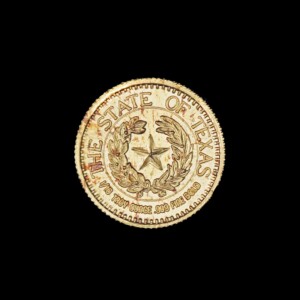
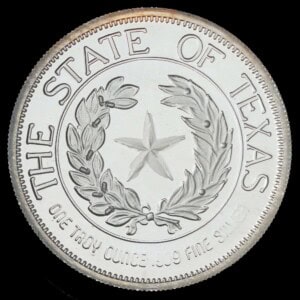
At the center of the seal is the five-pointed Lone Star, the defining emblem of Texas since the Republic period. Adopted in 1836, the star represents Texas as an independent nation, later carried forward as the enduring symbol of the “Lone Star State.” Surrounding the star are branches of live oak and olive, forming a wreath that conveys dual meaning: live oak for strength and endurance, and olive for peace. This is the “State Arms” of Texas. Encircling the State Arms is the inscription “THE STATE OF TEXAS,” reflecting the transition from republic to statehood while preserving the original iconography.
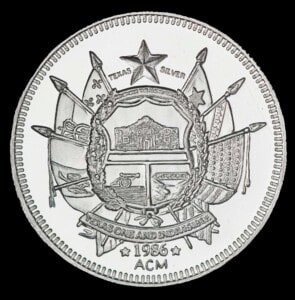
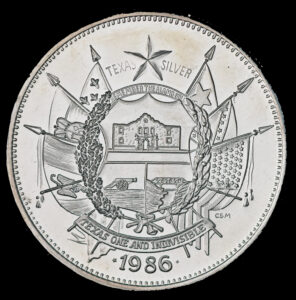
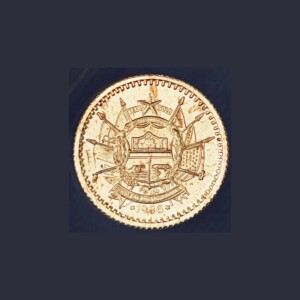
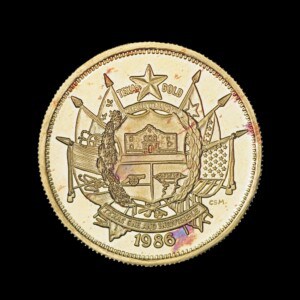
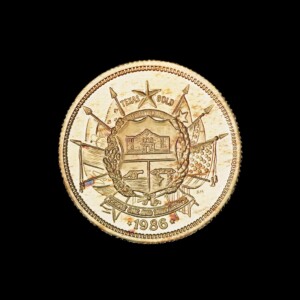
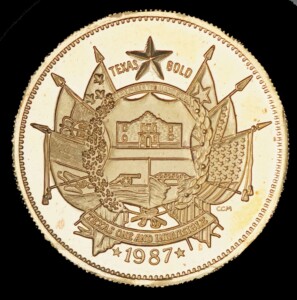
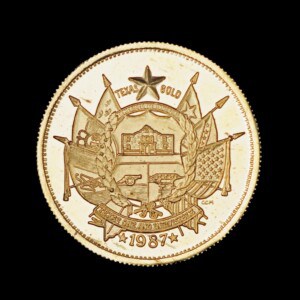
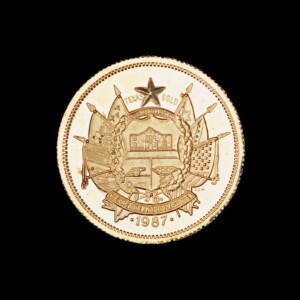
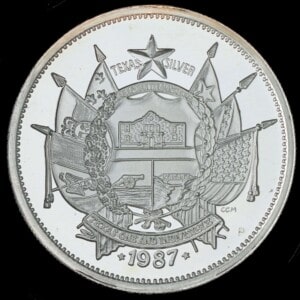
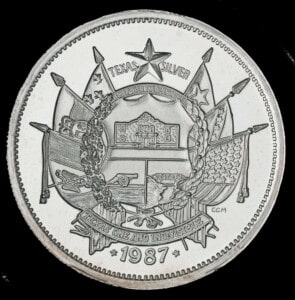
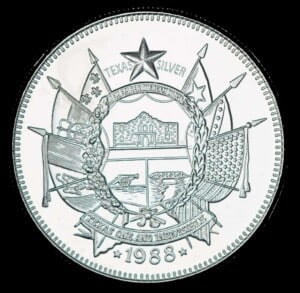
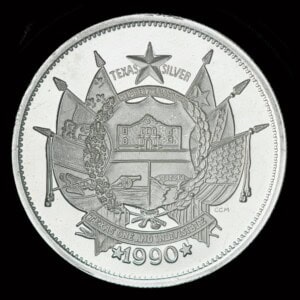
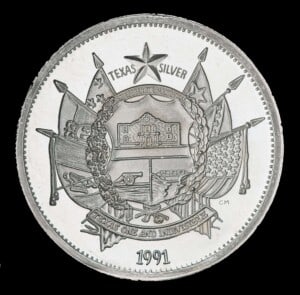
The opposing side of the design incorporates the full historical composition of the reverse of the state seal, which presents a structured narrative of the battle for Texas independence. At its center is a segmented shield divided into three fields, each depicting a pivotal moment in the Texas Revolution:
- The Alamo, representing resistance and sacrifice
- The Battle of Gonzales cannon, symbolizing the opening defiance of Mexican authority
- Vince’s Bridge, marking the decisive tactical action that secured victory at San Jacinto
Surrounding the shield are olive and live oak branches, reinforcing the themes of peace and strength, along with the flags of the governments that have exercised sovereignty over Texas. Above the composition appears the motto “REMEMBER THE ALAMO,” a rallying cry rooted in the Texas Revolution, while below is the inscription “TEXAS ONE AND INDIVISIBLE,” emphasizing unity and state identity.
By incorporating both sides of the state seal and reversing their placement, the design creates a complete and balanced symbolic system. The result is not merely decorative, but historical in structure, presenting Texas identity through its founding events, enduring symbols, and constitutional imagery in a single, unified format.
Composition and Format
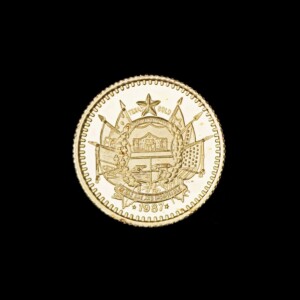
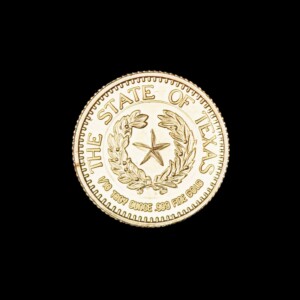
The series includes both silver and gold rounds. Silver issues are struck in .999 fine silver at 1 oz and 1/2 oz, while gold issues were produced in 1 oz, 1/2 oz, 1/4 oz, 1/10 oz and 1/20 oz. All pieces are round with reeded edges, and finishes range from brilliant uncirculated to proof-like, depending on the specific issue.
Mint Marks and Varieties
The CSM, CM, CCM, P, and no mint mark are documented within the series as part of the Colonial Coins mint-mark structure. References attributing “CCM” to California Crown Mint appear in some marketplace listings, but are NOT supported by primary-source documentation for this series. This site’s research is supported by first-hand interviews with the owner of Colonial Coins, confirming production in Texas, along with eye-witness accounts of the rounds being struck at the Colonial Coins facility in Houston.
The ACM mark is documented on issues dated 1986 and 1987 and is associated with American Custom Minting, Dallas Texas, representing a defined set of dies used within those production runs.
Die Variety and Research Significance
Detailed analysis confirms that the series was produced using multiple independently engraved dies. Observable differences appear in architectural details, lettering, relief treatment, flag rendering, wreath counts, and supporting design elements. These characteristics define distinct production groups and establish the series as a multi-die bullion program with clear internal variation.
This structure provides a strong framework for attribution and classification, making the series a significant subject for continued research within Texas numismatics.
Program Structure
The State of Texas rounds were issued as individual pieces and as part of original Official Texas Bullion Special Presentation Sets. The presentation sets group gold and silver denominations into coordinated display formats and preserve the program’s original branding.
Within the series:
- Individual pieces are classified as Official Texas Bullion Medallions.
- Boxed groupings are classified as Official Texas Bullion Special Presentation Sets.
This structure reflects both collector usage and original program organization.
Collecting Notes
The series combines Texas historical imagery, multiple mint-mark varieties, die variation, and original presentation formats. Collectors encounter both silver and gold issues, with identification based on date, denomination, mint mark, finish, and die characteristics.
The State of Texas rounds represent a structured and visually consistent bullion program with meaningful variation across its production, offering both accessibility and depth for collectors and researchers.
Coins in this Collection (20)