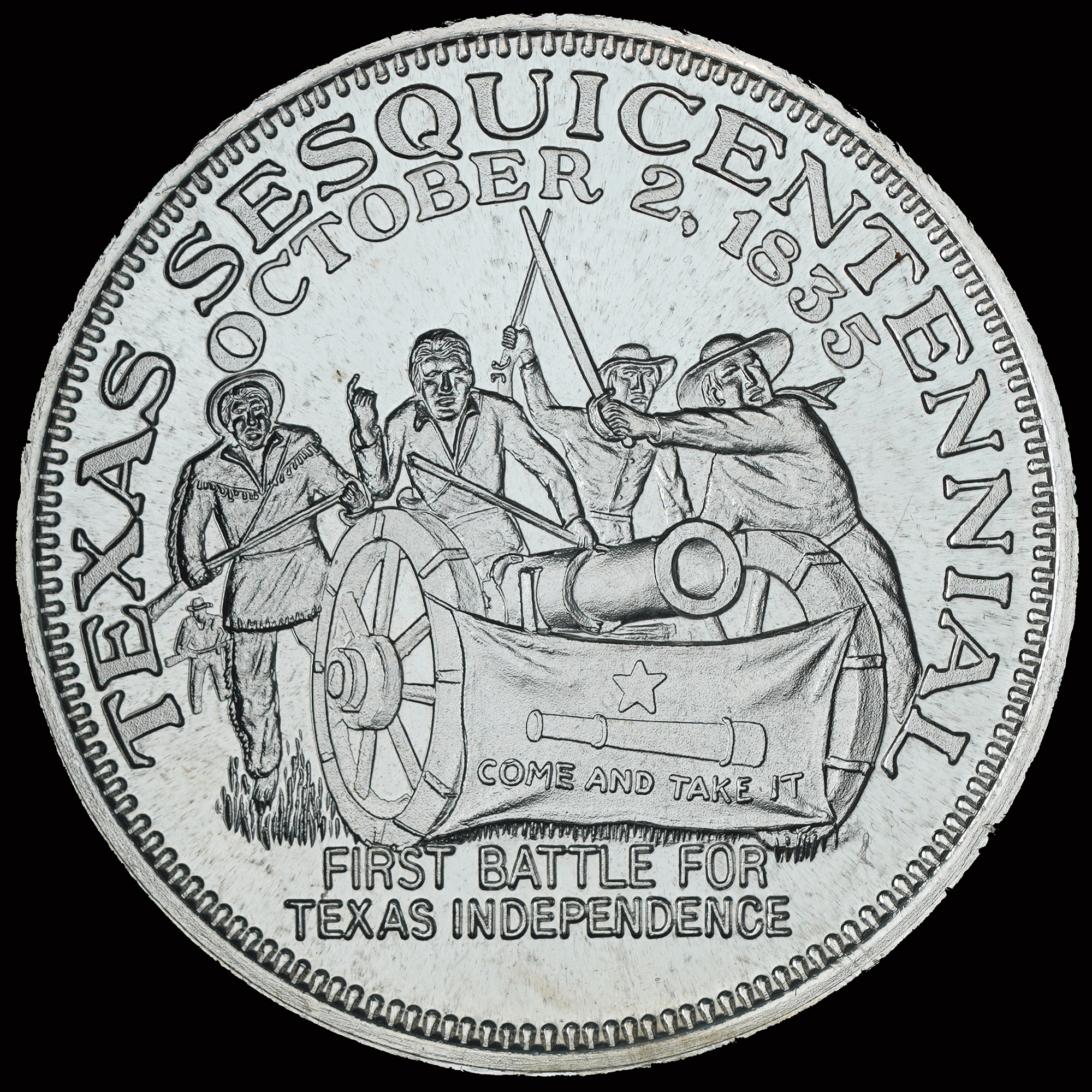


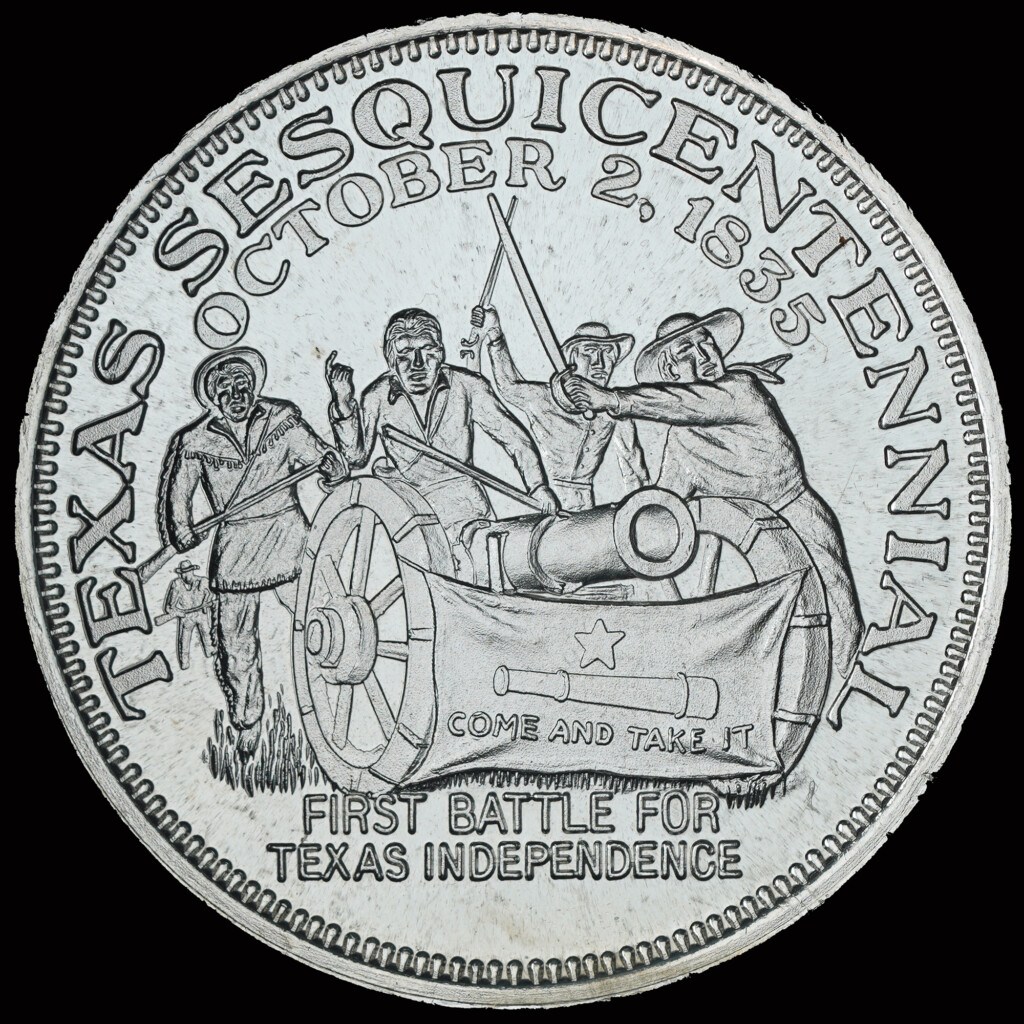
Texian fighters gather around a cannon, one with a raised sword, with a banner bearing a star and a cannon draped across the gun. "TEXAS SESQUICENTENNIAL" and "OCTOBER 2, 1835" arch across the top, "COME AND TAKE IT" is on the banner, and "FIRST BATTLE FOR TEXAS INDEPENDENCE" runs below.
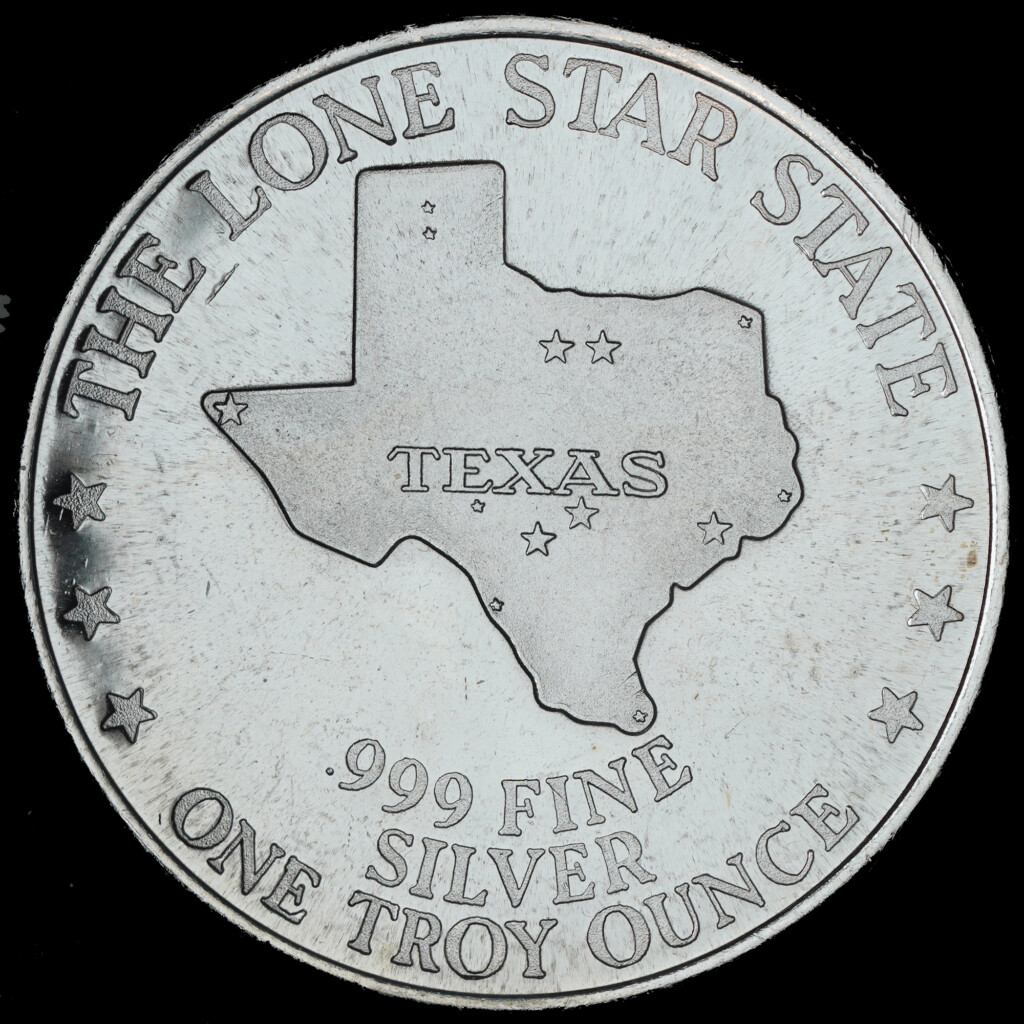
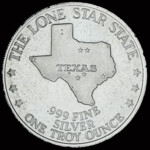
"THE LONE STAR STATE" arches over an outline of Texas bearing the word "TEXAS" and scattered stars. ".999 FINE SILVER" and "ONE TROY OUNCE" are struck below.
Issuer and distributor attributed to Colonial Coins, Inc. per a period Coin World advertisement listing the "Cannon" design in 1 oz silver. No mint mark or maker's name is struck; manufacturer unknown. Year attributed to 1986 from the series; no issue year is struck on this obverse.
The 1986 Gonzales Cannon Lone Star State silver round trades infrequently, with only a handful of verified sales since 2017 and some years with no sales.
| Date | Price | Notes |
|---|---|---|
| Sep 13, 2025 | 69.00 | Most RecentHighest EverUnverifiedDesign not clearly visible in photo; included per Tex as Gonzales Cannon |
| Feb 18, 2024 | 67.88 | |
| Sep 11, 2020 | 33.99 | |
| Aug 23, 2020 | 39.00 | |
| Apr 22, 2017 | 40.45 |
Scroll for full 5-sale history ↓
1986 Gonzales Cannon – Lone Star State Silver Round Overview
The 1986 Gonzales Cannon – Lone Star State Silver Round is the Gonzales design of The Lone Star State Collection, a six-design series sold through Colonial Coins, Inc. of Houston for the 150th anniversary of Texas independence. It is the series’ first-shot design. Months before the Alamo, before the declaration at Washington-on-the-Brazos, the Texas Revolution began over a small bronze gun and a town that would not hand it over.
The cannon came to Gonzales as a favor. On January 1, 1831, empresario Green DeWitt asked Ramón Músquiz, the political chief at Bexar, for a cannon to protect his colonists against hostile Indians, and on March 10, 1831, James Tumlinson Jr. received one bronze gun to carry to DeWitt, with the condition that it be returned if Mexican authorities asked for it. According to the Handbook of Texas, it was a Spanish-made six-pounder, probably kept on a swivel in one of the town’s two blockhouses. In September 1835, with tension rising across Texas, Col. Domingo de Ugartechea, the Mexican commander at Bexar, asked for it back. He sent Corporal Casimiro De León and five soldiers, and the colonists answered by taking the soldiers prisoner, burying the cannon in George W. Davis’s peach orchard, and sending riders to the Colorado River settlements for help.
Ugartechea then sent Lt. Francisco de Castañeda and about 100 dragoons. On September 29, Capt. Robert M. Coleman rode into Gonzales with thirty mounted Indian fighters. The cannon was dug up, taken to John Sowell’s blacksmith shop, and mounted on the front wheels of Albert Martin’s cotton wagon. A committee of five officers designed a flag showing a cannon and the words “Come and Take It,” and the women of Gonzales supplied the cloth. Some unverified accounts say it was cut from Naomi DeWitt Matthews’s silk wedding dress. That is the banner draped over the gun on the round.
On October 1 the Texians crossed the swollen Guadalupe River, and on the morning of October 2, militia led by John Henry Moore attacked Castañeda’s camp, according to Texas Day by Day and the Handbook’s account of the Texas Revolution. The fight was short. The cannon fired twice in the third skirmish of the day, and a second, smaller iron gun had fired earlier. One Mexican soldier was killed, and Castañeda withdrew to San Antonio. The Handbook calls it “considered to be the first battle of the Texas Revolution,” and the round says as much in its own words: “FIRST BATTLE FOR TEXAS INDEPENDENCE.” The Texians’ reply to a demand for a cannon, the defiant “Come and Take It,” became the Texian rebels’ motto.
The round puts the moment in the foreground. Four men crowd around the cannon, one with a sword raised, with a small fifth figure in the distance, and the banner with its lone star and cannon hangs across the gun. The date “OCTOBER 2, 1835” arcs over the scene beneath “TEXAS SESQUICENTENNIAL,” tying the first shot to the 1986 anniversary.
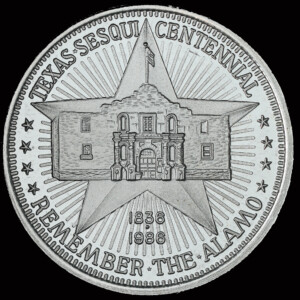
The cannon’s story did not end at Gonzales. It joined Capt. James C. Neill’s artillery, was hauled to San Antonio, and served in the Siege of Bexar, which ended December 5, 1835, when Gen. Martín Perfecto de Cós surrendered. It was still at the Alamo when Mexican forces retook the fortress on March 6, 1836, and they took it as one of twenty-one large guns. The Handbook says it was buried with other captured Texan cannons inside the Alamo compound and does not say when or where it was found. The flag was lost after it was carried toward San Antonio. The smaller gun was abandoned at Sandies Creek after its carriage failed, until a flood in 1936 exposed it, and it is now in the Gonzales Memorial Museum. A different bronze cannon, unearthed by Samuel Maverick in 1852 and later recast into a church bell, is sometimes wrongly identified as the Gonzales gun. The fall of the Alamo is the subject of the series’ Alamo design.
1986 Gonzales Cannon – Lone Star State Silver Round Attribution
The struck date on the obverse, October 2, 1835, is the date of the battle, not an issue date, and no year of manufacture is struck on the round. The year is attributed to 1986 as part of the six-design series, whose Lone Star and Alamo obverses carry the dates 1836 and 1986 and whose legends mark the Texas sesquicentennial. The attribution holds until contemporary documentation turns up an exact release date.
The round carries no mint mark or maker’s name, and nothing located so far identifies the plant that struck it. Issuer and Distributor are attributed to Colonial Coins, Inc.: a period Colonial Coin World advertisement lists the Lone Star State line, including the “Cannon” design in 1 oz silver, as Colonial’s product. No Certificate of Authenticity or original packaging has been tied to this example, so the attribution rests on the advertisement and is attributed, not confirmed.
1986 Gonzales Cannon – Lone Star State Silver Round Notes
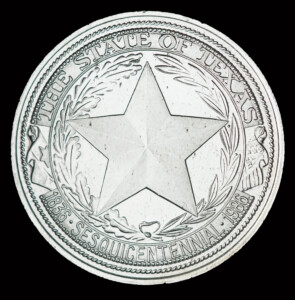
- The reverse is shared with the other five silver obverses of The Lone Star State Collection.
- “FIRST BATTLE FOR TEXAS INDEPENDENCE” is the round’s own wording. The Handbook of Texas calls Gonzales the first battle of the Texas Revolution.
- No serialized Gonzales Cannon round has been seen yet. This entry covers the plain 1 oz silver round only.
1986 Gonzales Cannon – Lone Star State Silver Round References
- Gonzales “Come and Take It” Cannon, Handbook of Texas, Texas State Historical Association
- The Battle of Gonzales, Texas Day by Day, Texas State Historical Association
- Texas Revolution, Handbook of Texas, Texas State Historical Association
- Colonial Coins, Inc., period Coin World advertisement listing the Lone Star State designs and formats
- The Lone Star State Collection, The Texas Stacker
- Colonial Coins, Inc. (Houston, TX), The Texas Stacker
- Documented example examined (this entry)
- Texas Stacker Archives